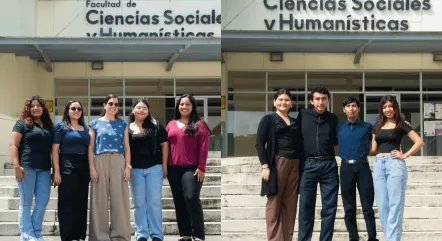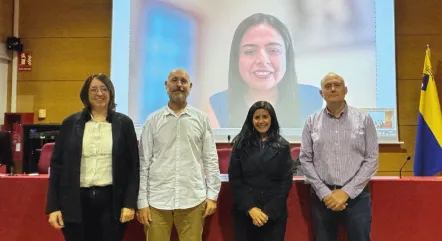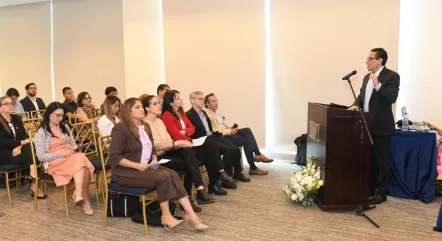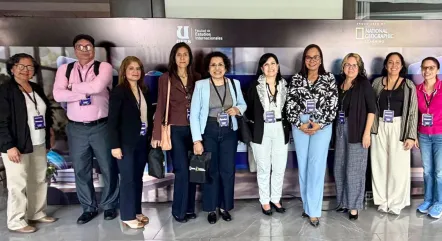


Twenty-six students from the Faculty of Social Sciences and Humanities took part in a banking certification program. It was organized in a strategic partnership with the Association of Banks of Ecuador (ASOBANCA) and the Institute of Banking and Insurance (IPBF).
This academic activity was led by Professor María Elena Romero. Students from the Business Administration, Auditing and Management Control, and Economics programs took part. They are all taking the Financial Analysis course and belong to the student club Una Milla Extra.
The certification course lasted 5 hours and 30 minutes and covered the following modules:
- The financial sector and its relationship with the economy
- Financial risk management
- Personal finance and the financial sector
- Datalab and the current financial situation
According to Professor Romero, strengthening financial education among university students is essential to give them tools to make informed and responsible decisions, both in their personal and professional lives. Understanding how the financial sector works and how it relates to the economy, identifying financial risks, and interpreting information about the economic environment are skills that will help them do better in an increasingly dynamic and complex world.
She also stressed how important it is for young people to learn, from their university years, to manage their resources efficiently, build saving habits, take responsibility for their financial commitments, build a good credit history, and avoid possible scams and fraud.
Student Daniela Suárez said that these initiatives are very helpful because, besides reinforcing what students learn in class, "we learned how to save without necessarily limiting ourselves in other areas."
At the end of the course, students will have the chance to earn a certification if they pass an assessment of the knowledge they have gained. This certification not only encourages students to take part in complementary training, but also recognizes their learning and strengthens their financial skills. It will also be an added value on their résumés, helping to improve their professional profiles and increase their chances of entering the job market.