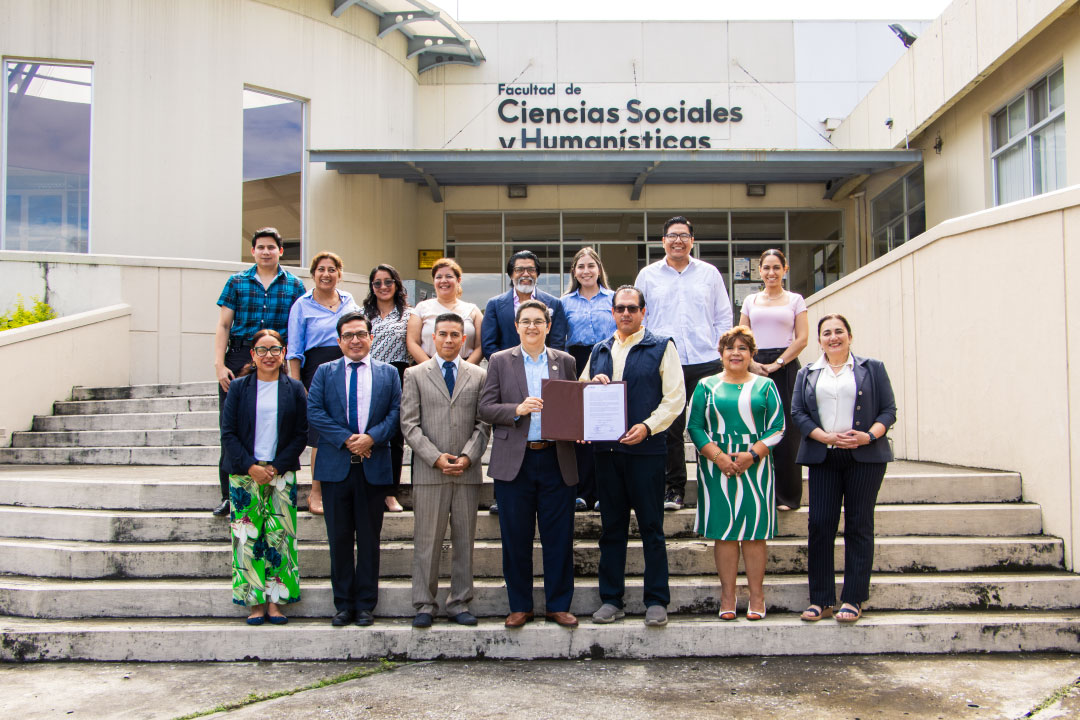


On November 5, the Faculty of Social Sciences and Humanities (FCSH) at Espol received a visit from representatives of the Council for Quality Assurance in Higher Education (CACES). The goal was to evaluate the resources and conditions the Faculty has to run a doctoral program. Espol welcomed this external evaluation openly, which shows its commitment to continuous improvement and academic quality.
The visit began with a speech by Carlos Monsalve, Vice President for R&D&I. He presented the institution and talked about its strengths in mission, infrastructure, and research capacity.
Next, Carla Ricaurte, Dean of the FCSH, explained why a doctorate in social sciences is needed at a polytechnic university. She said that the security situation in Guayaquil and the coast calls for a deep study of the social fabric. This study can help improve public policy.
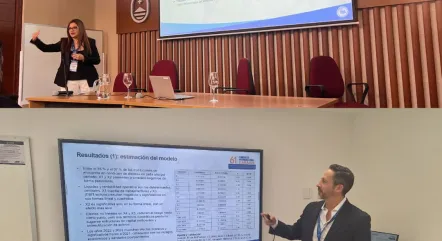
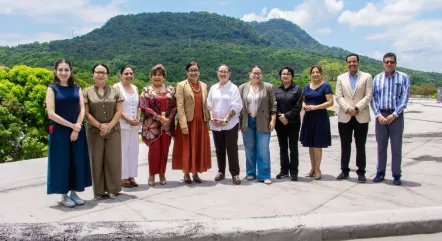
The CACES external evaluation committee was made up of the academics Giovanny Manosalvas, team coordinator, Jaime Samaniego, and María José Calderón. José Valdivieso, who is in charge of the qualification process, went with them. The committee reviewed several indicators: the Graduate Programs Unit, research groups, academic staff, and the quality and impact of research. It also reviewed the infrastructure and learning environments, including the laboratories and hybrid classrooms.
During the visit, Espol also presented the District 100 project, which it leads. The project aims to turn the Las Peñas campus into an innovation zone connected to downtown Guayaquil. The FCSH has a role in this project: it manages the community outreach program. This program has several components to improve the subsistence economy and to strengthen business innovation. The dean stressed that this program, which is developed with the University of Notre Dame, is designed for the graduate area. This supports the need for a doctorate in social sciences.
Juan Manuel Domínguez, the researcher who leads the doctoral program initiative, said that Espol has reached an institutional maturity that allows it to develop this type of program. He explained that the Faculty's academics have held several meetings to decide the direction and focus of the doctorate. The goal is that decisions are made by consensus and are properly discussed.
In the same way, Milton Paredes, Graduate Programs Coordinator at the FCSH, said that the name of the doctoral program is still being widely discussed. “What we do agree on is that it must be in applied social sciences,” he said. This matches the institutional approach, in which research offers solutions to the country's big problems.
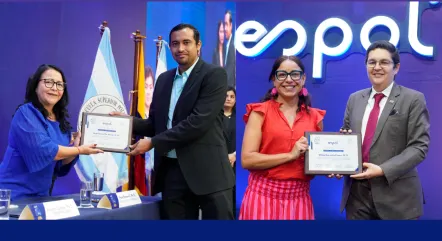
The visit ended with the signing of a record that notes the topics discussed, the documents reviewed, and the collaboration of the professors and researchers involved. With this, Espol confirms its willingness to go through external evaluation processes as part of its culture of continuous improvement.