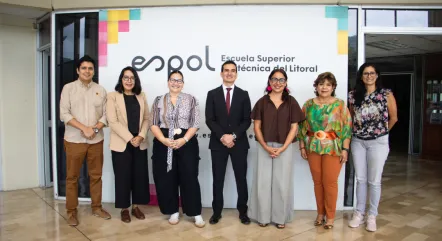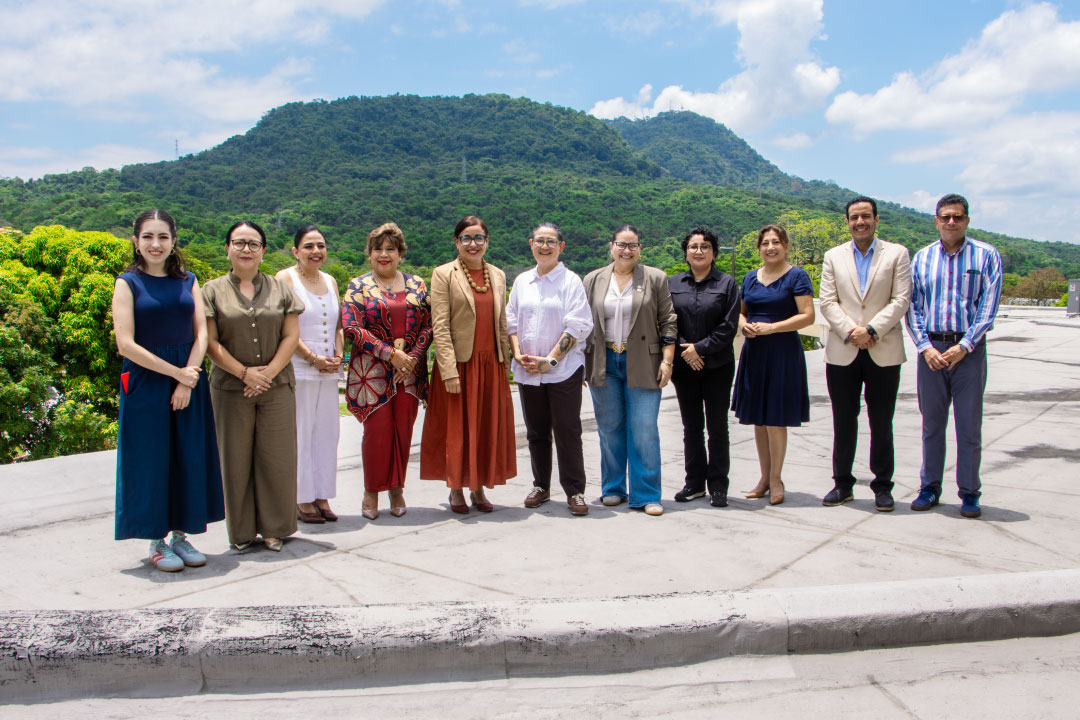


The Faculty of Social Sciences and Humanities (FCSH) of Espol welcomed the evaluation team from the Council for the Accreditation of Communication and Social Sciences (CONAC) as part of the international accreditation process for the Archaeology program.
The evaluation team carried out an inspection agenda from October 21 to 23. It was made up of Roberto López, professor and researcher at the Autonomous University of Sciences and Arts of Chiapas; Violeta Vásquez, head of the Archaeology program at the Universidad Veracruzana; and Yunuhen Mendoza, academic and administrative secretary of CONAC.
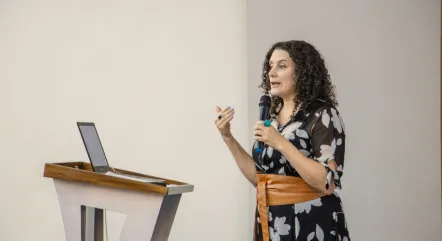
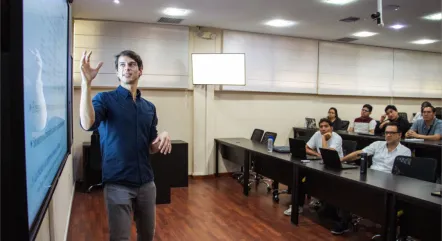
The agenda began with a welcome from the Vice Rector of Teaching, Paola Romero, and a presentation about Espol, the FCSH and the Archaeology program, led by Dean Carla Ricaurte. Next, professors Andrés Mosquera, Ana Paula Alcaraz and Paula Torres presented the program’s research projects. The projects were:
Archaeological survey and excavation at the El Edén site, to study activity areas, site formation processes and subsistence in artificial mounds located in San Isidro parish, Morona canton, Morona Santiago province.
Archaeological excavation in the Olón Commune, Manglaralto parish, Santa Elena canton, Santa Elena province.
Emergency archaeological rescue of the skeletal remains from the epidemiological context of the 1842 yellow fever epidemic, at the Municipal Museum of Guayaquil, Rocafuerte parish, Guayaquil canton, Guayas province.
Each of these projects is important at the national, provincial and local levels.
The evaluators also held private meetings with students, graduates, professors and employers of the Archaeology program. Their goal was to learn each group’s views on the academic experience, the educational model, professional development opportunities, job placement, and how relevant and useful the learning in the classroom is.
The tour of the facilities was also an essential part of the inspection visit. It included the Archaeobotany, Physical Archaeology, and Lithics and Ceramics laboratories. In each one, the professor in charge explained its importance in the teaching and learning process of future professionals.
Another important part of the visit was the presentation of the services that the Wellbeing Office offers to the polytechnic community: medical, psychological, recreational and wellbeing services, based on equity, diversity and inclusion. The evaluators learned about initiatives such as Espolkeepers and the Child Development Center, known as Baby Espol. They also learned about the work done with student clubs and groups, scholarships and financial aid.
The visit ended with a meeting in which the evaluation team presented a report of its findings. The meeting was attended by the Rector of Espol, Cecilia Paredes; the Vice Rector of Teaching; the Dean of the FCSH; the Associate Dean, Patricia Valdiviezo; the Director of Accreditation and Rankings, Sofía López; the coordinator of the Archaeology program, Lina Enderica; and the FCSH international accreditation coordinator, Christian Vera.
The report highlighted the institution’s commitment to academic excellence, Espol’s prestige, the quality of its infrastructure, the relevance of the curriculum, and the value of its outreach and research work with real impact. It also recognized a transparent and honest self-evaluation process, as well as areas for improvement. In this regard, the Rector said: “The message is clear: there is always room for improvement and for discussion to plan the future of the program.”