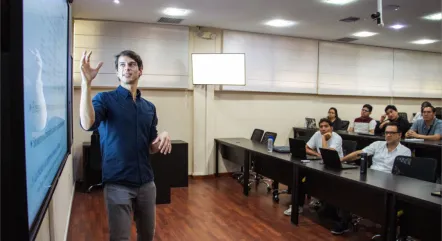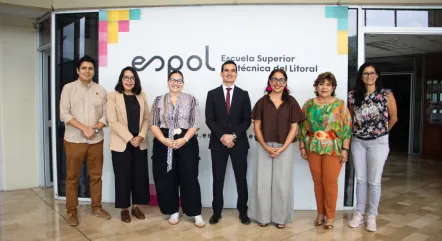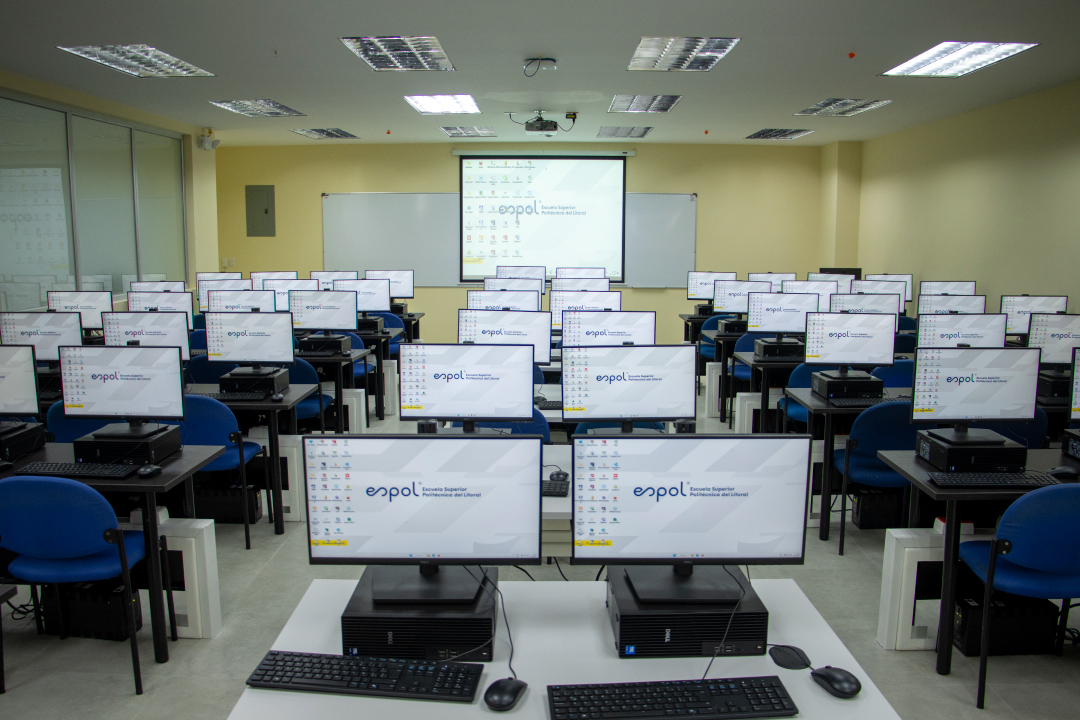

The Faculty of Social Sciences and Humanities (FCSH) at ESPOL Polytechnic University continues to enhance its academic facilities with the implementation of new computer laboratories. These spaces are designed to support practical classes, student activities and training programs.
The new laboratories, identified as L001, L002, L003, and L004, represent an important step forward in improving the Faculty’s technological infrastructure and creating suitable environments for student learning and professional development.
In total, the new laboratories provide 210 workstations, distributed as follows:
Laboratories L002 and L003, with a capacity of 45 users each.
Laboratories L001 and L004, with a capacity of 60 users each.
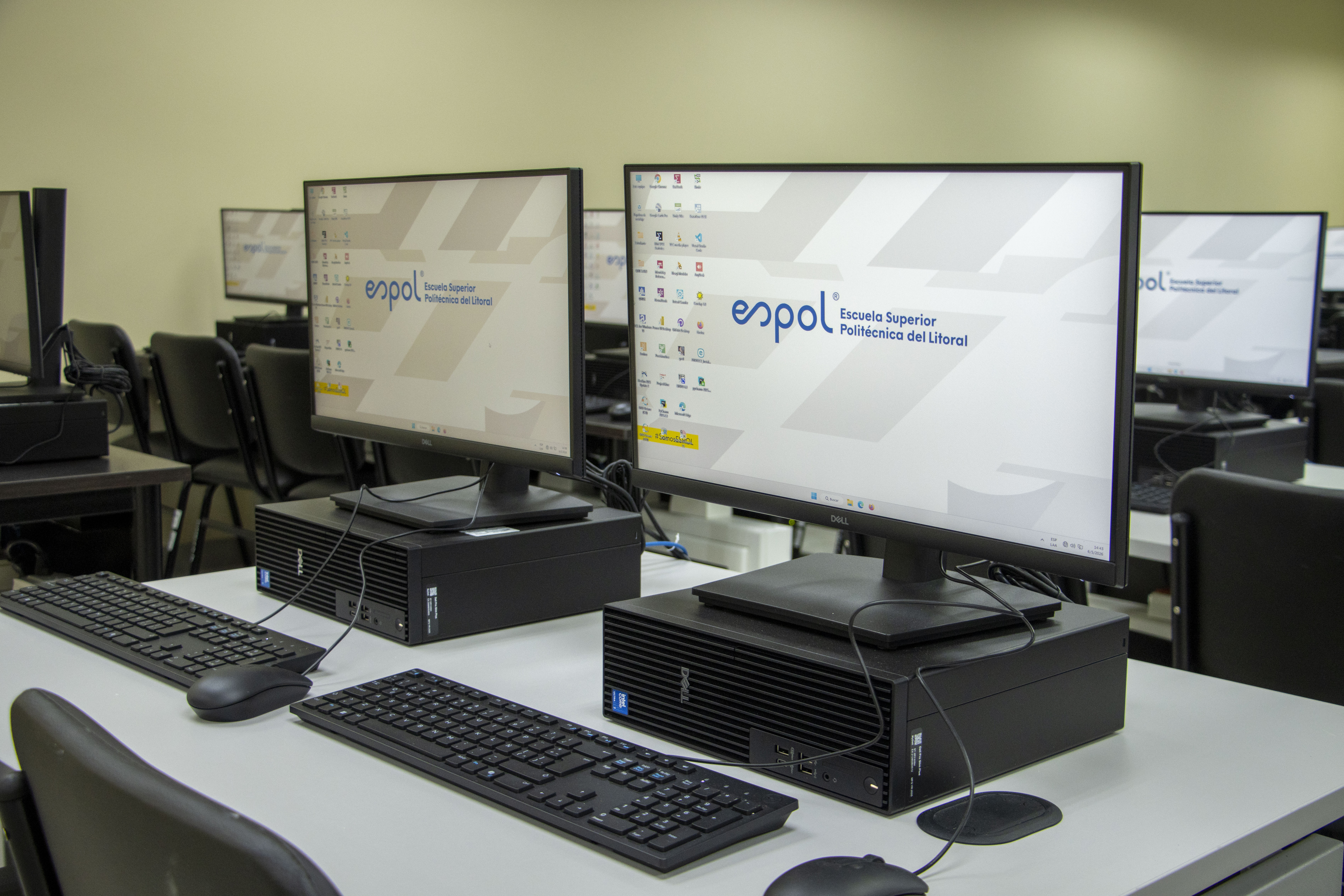
These facilities will support a wide range of academic and student activities in an organized and efficient manner, expanding access to the technological resources required for higher education.
Each workstation is equipped with next-generation processors, sufficient RAM to run specialized applications, solid-state storage, webcams for virtual sessions, high-speed internet connectivity, and updated operating systems.
In addition, all computers are integrated into the university’s network and configured according to the Faculty’s technological standards, ensuring a secure and functional environment for both students and faculty members.
Laboratory L002 will be primarily dedicated to student use and will provide computers equipped with webcams for virtual sessions, academic practice, and other pre-approved activities. To access a workstation, students must present their university identification card and use the facility according to availability.
Key usage guidelines include using the equipment exclusively for academic and institutional purposes, refraining from consuming food or beverages inside the laboratories, avoiding the manipulation of cables, and maintaining the cleanliness and organization of the space.
We encourage all students to make use of this new facility, which is a shared community resource. Its preservation depends on the commitment, responsibility, and cooperation of every user.