

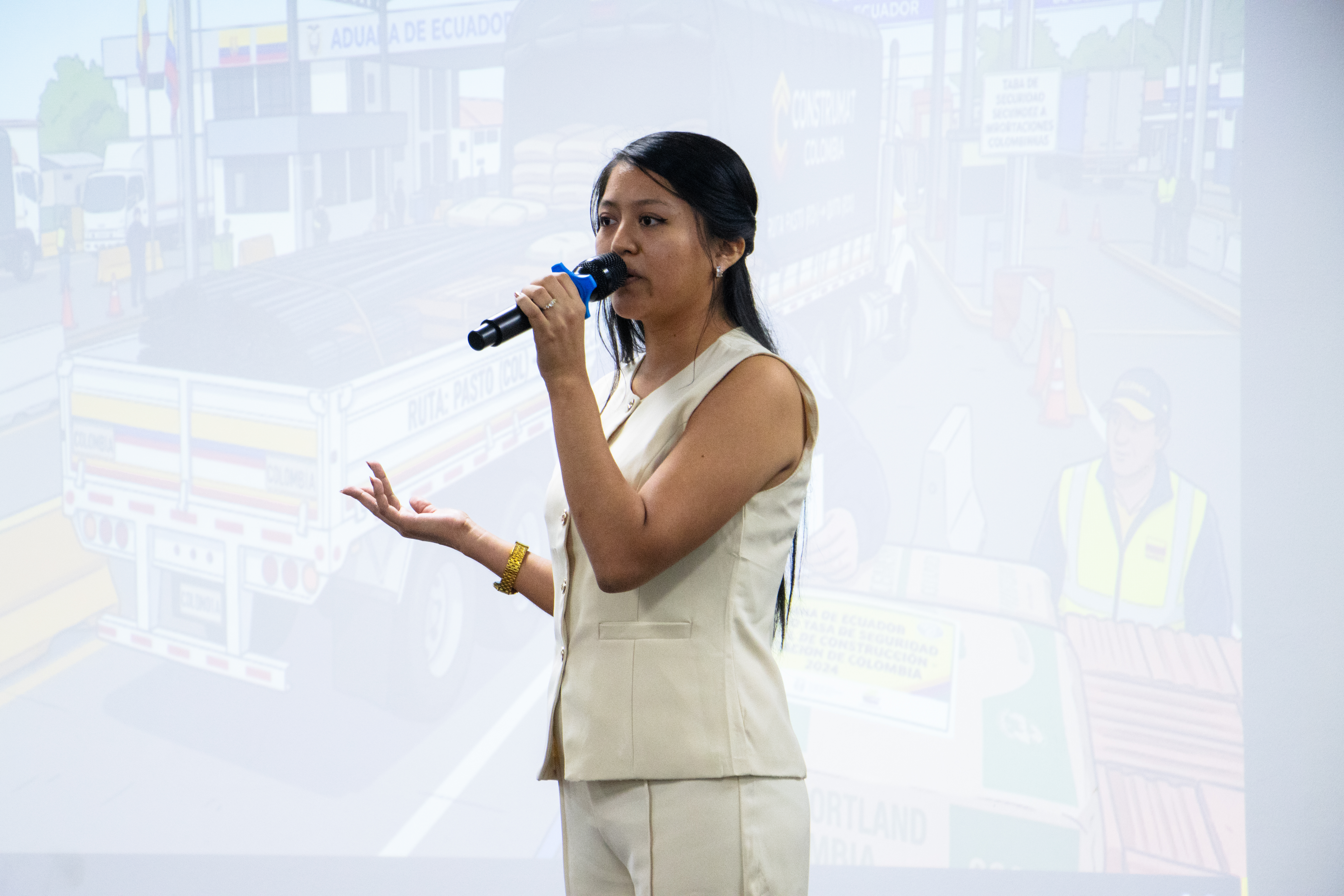
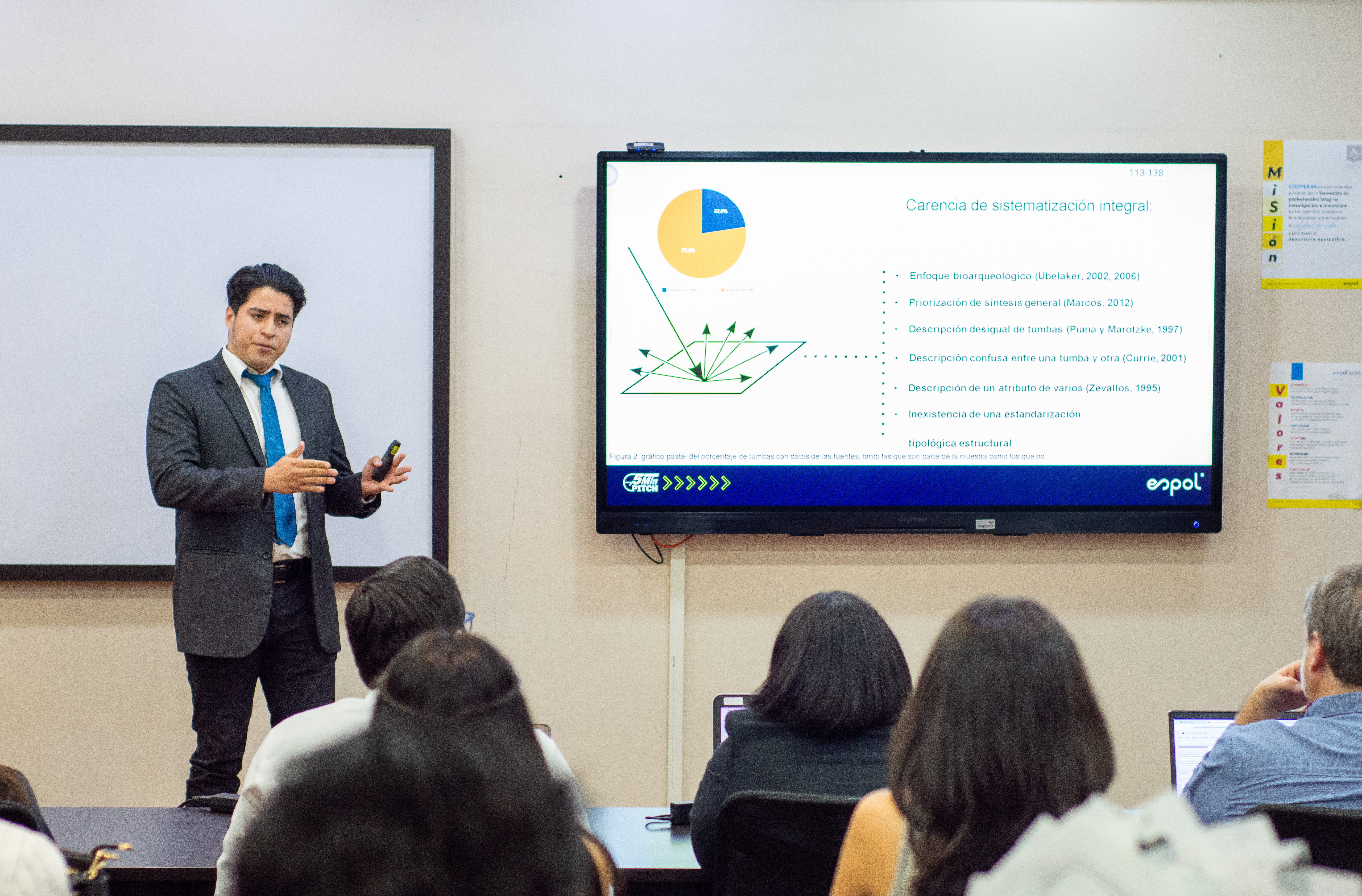
n just five minutes, a speech, an idea, and a well-argued solution can make the difference between convincing a real client or not. That was exactly the challenge faced by students from the Faculty of Social and Human Sciences (FCSH) at ESPOL in the communication challenge known as the 5 Minutes Pitch, one of the most anticipated activities within the Capstone Course (Materia Integradora).
During the first academic term of 2026, a total of 65 projects, developed by students from the Economics, Auditing and Management Control, Tourism, Archaeology, and Business Administration programs, reached this stage after months of work with real clients from the public and private sectors. The semifinals took place between August 31 and September 3.
Un cierre de carrera con propósito real
The Capstone Course is the academic space where students, close to graduation, must demonstrate in a practical way everything they have learned throughout their university education. During this process, they work in teams to develop a capstone project that addresses a real-world problem, working alongside a client from the public or private sector who needs a concrete solution to a challenge facing their organization.
This is not a theoretical exercise or a hypothetical case: the teams research, diagnose, and design proposals that could be implemented in real life, applying knowledge of communication, management, social analysis, and strategic thinking acquired throughout their studies.
El reto: convencer en cinco minutos
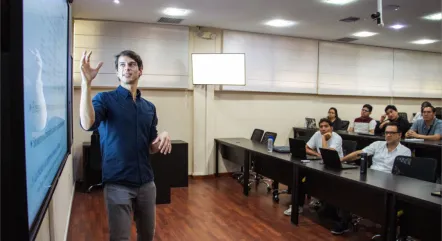
Once the project is developed, the decisive moment arrives: the 5 Minutes Pitch. Here, each team must present its proposal before a panel of judges within a strict five-minute time limit.
The process was organized into semifinals, one per program, held from August 31 to September 3, in which a panel of judges evaluated the participating teams based on four key criteria:
- Description and importance of the problem to be solved.
- Communication skills of the presenters.
- Stage presence during the presentation.
- Value proposition of the solution presented.
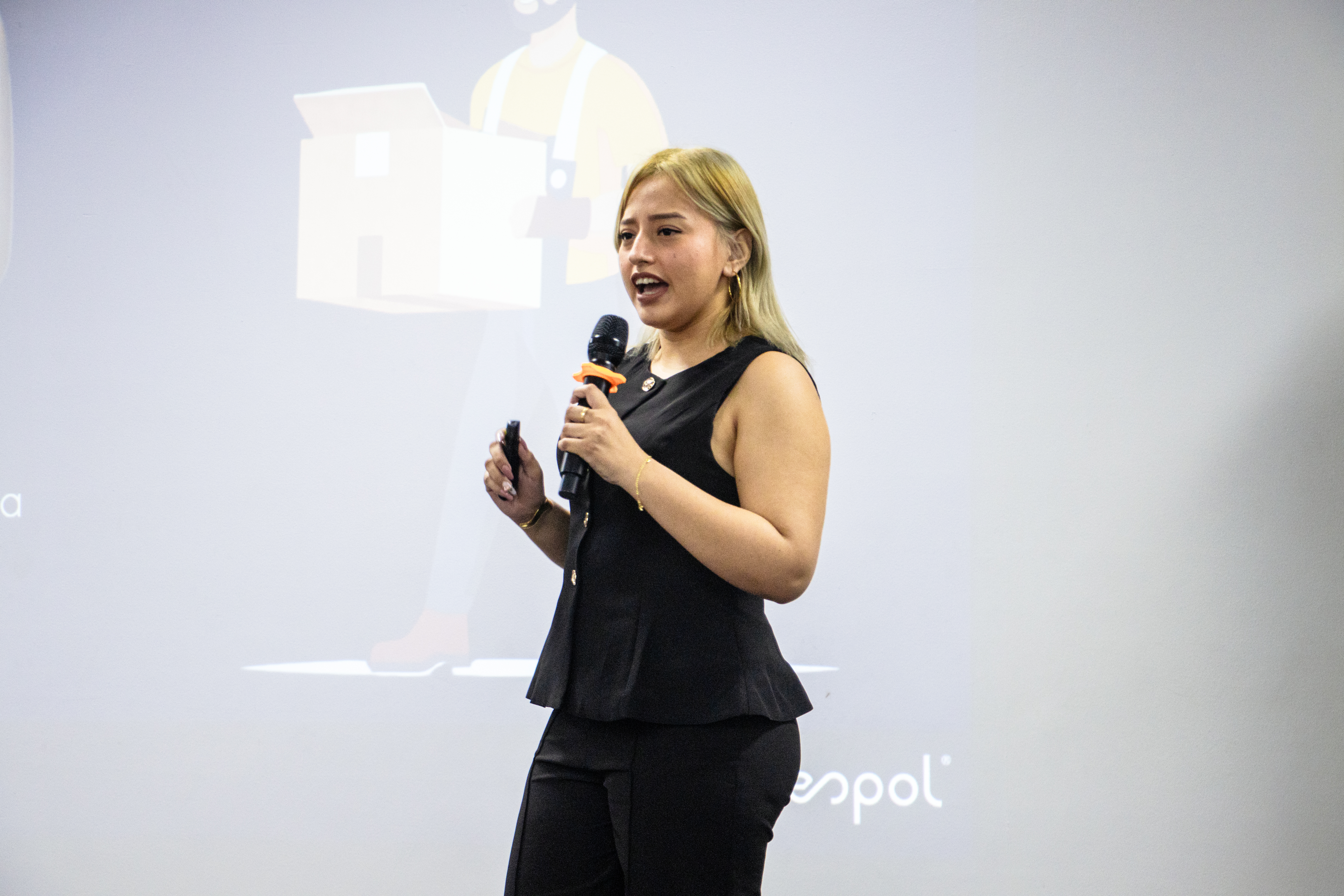
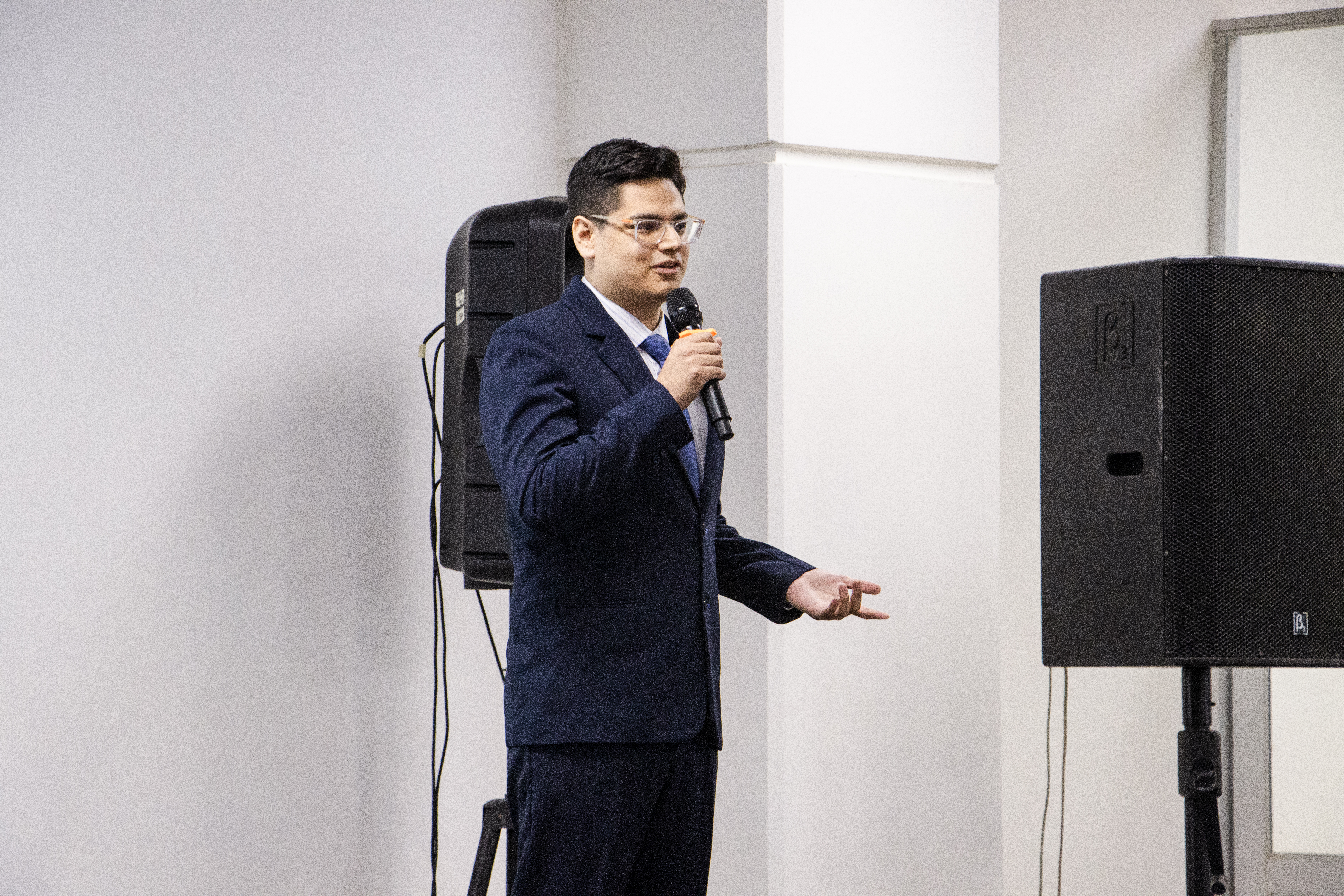
The format requires students to go beyond content alone: they must condense months of work into a clear, persuasive, and memorable presentation, master nonverbal communication, and manage their time with precision. It is, in essence, a simulation of what they will experience as professionals when presenting value propositions in real business or public management settings.
The finalists by program
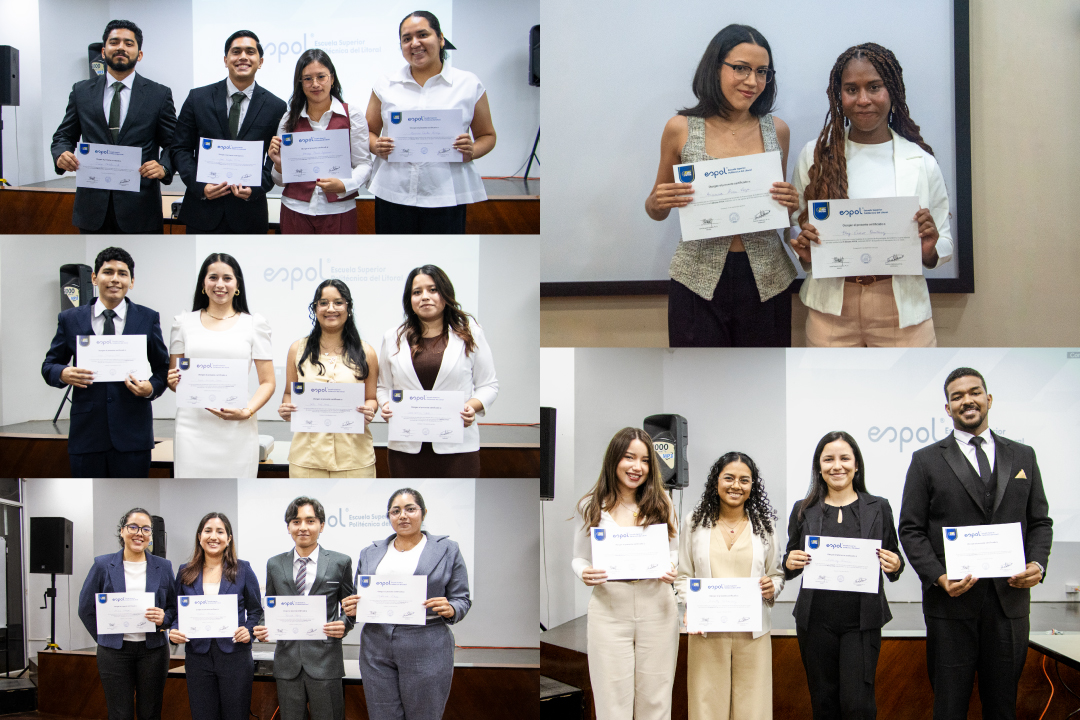
Of the 65 projects presented, the following teams emerged as finalists:
Archaeology
Arianna Parra Loza:
Project: Macroscopic analysis of musculoskeletal stress markers in adults from the Middle Valdivia Period, Real Alto.
Elsy Vivero Quiñónez
Project: Digital repository for the conservation and dissemination of bioarchaeological findings at the Real Alto site, Valdivia phase III.
Tourism
Paulina Torres and Sucetty Chancay
Project: Design of an operational management toolkit for the Casa Playa Hostel in the Palmar community, Santa Elena.
Ángel Paredes and Nathaly Román
Project: Valuing intangible heritage as a factor of tourism competitiveness in the Manglaralto parish.
Business Administration
Melanie Chasi and Ronald López
Project: Strategic marketing plan for stairlifts for people with reduced mobility in the city of Guayaquil.
Melani Centeno and Ariana Salazar
Project: Smart marketing for real clients: automation and personalization driving e-commerce.
Economics
Juan José Bustamante and José Daniel Rojas
Project: The impact of insecurity on microcredit placement in Ecuador: an exploratory study of the financial sector.
Bianca Quito and Odalys Farías
Project: Assessing the openness and accessibility of Ecuadorian brokerage firms for small investors through a financial-digital diagnostic model.
Auditing and Management Control
Camila Zambrano Mendoza and Steffy Reyes Macías
Project: Design of an automated client-rating system for stock market negotiations at a brokerage firm.
Angela Ganchozo Intriago and Sergio Chiriguayo Bueno
Project: Design of a public procurement tracking system for a bus terminal.
Heading to The Final Pitch
In recognition of their performance, all finalist teams were awarded a scholarship for an executive training course. They also advance directly to the grand final of this communication challenge, called The Final Pitch, which will take place on September 15, where they will compete for the competition's top honor.
More than a grade, a formative experience
For ESPOL, the 5 Minutes Pitch represents much more than the final evaluation of a course. It's an opportunity for future professionals to:
- Strengthen their skills in effective communication and public speaking under pressure.
- Learn to defend ideas with evidence and solid arguments before a real client.
- Develop synthesis skills, a key competency in any professional environment.
- Experience firsthand the relationship between academia and the productive or public sector, understanding real market needs.
This exercise reinforces ESPOL's formative hallmark: professionals capable of communicating with impact, thinking critically, and proposing relevant solutions to society's problems.
Want to learn more about the Capstone Course and our students' projects? Follow us on social media: https://www.instagram.com/espol_fcsh/