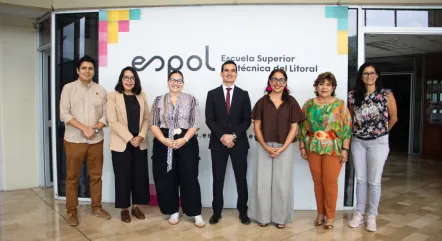

Professors from the Foreign Languages Center (CELEX) at Escuela Superior Politécnica del Litoral — Katherine Salvador-Cisneros, Darguin Padilla, Lidia Govea, and Wendy Rivera — together with Cindy Bolaños, a member of the institution’s Center for Educational Research and Services, participated in the study Incorporating Language Exchange in the Internationalization Strategy of Higher Education Institutions. This research examines how language exchange programs conducted locally can become an accessible tool for promoting internationalization within universities.
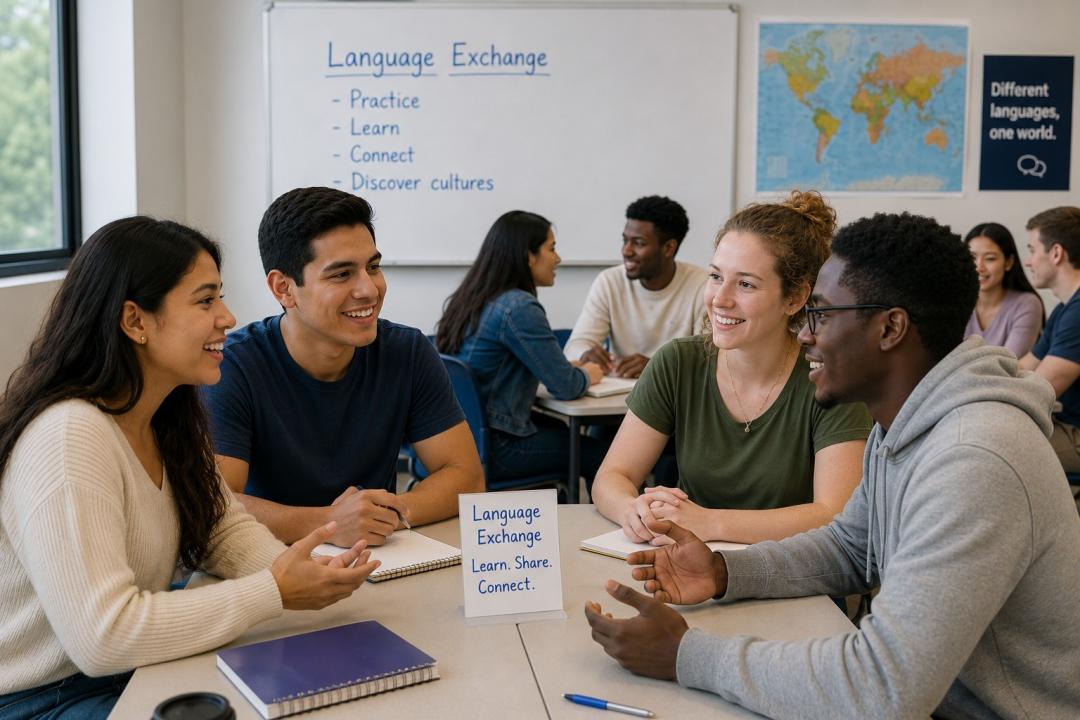
The study was carried out at a public Ecuadorian university between 2018 and 2019 as part of an English conversation club program based on the Language Exchange or Tandem methodology. As part of this initiative, university students in Ecuador interacted with exchange students and faculty members. Another activity included a visit to the Logos Hope ship, considered the world’s largest floating book fair, where students participated in activities with the vessel’s international crew members during its visit to the city of Guayaquil in 2019.
Among the main findings, the research revealed that this type of initiative helps improve confidence when speaking English, reduces anxiety during conversations, and fosters collaborative and intercultural learning among students. Participants also highlighted that these spaces allowed them to practice the language in a relaxed and welcoming environment while learning about new cultures and developing social and professional skills.
The research also emphasizes the importance of implementing “internationalization at home” strategies, an alternative approach that enables international experiences without the need to travel abroad. According to the authors, this model represents a particularly valuable opportunity for public universities in Latin America, where economic limitations and limited student mobility opportunities remain significant challenges.
The full study is available at: https://doi.org/10.1007/978-3-031-74751-9_41
CH