

The Faculty of Social Sciences and Humanities (FCSH) at ESPOL has started the international accreditation process for its Archaeology program. The accrediting body is the Council for the Accreditation of Communication and Social Sciences (CONAC in Spanish). Accreditation is an official recognition of quality. This process is part of ESPOL's strategic plan. The plan aims to improve our programs every year and to gain international recognition for their quality.
A program with a long history
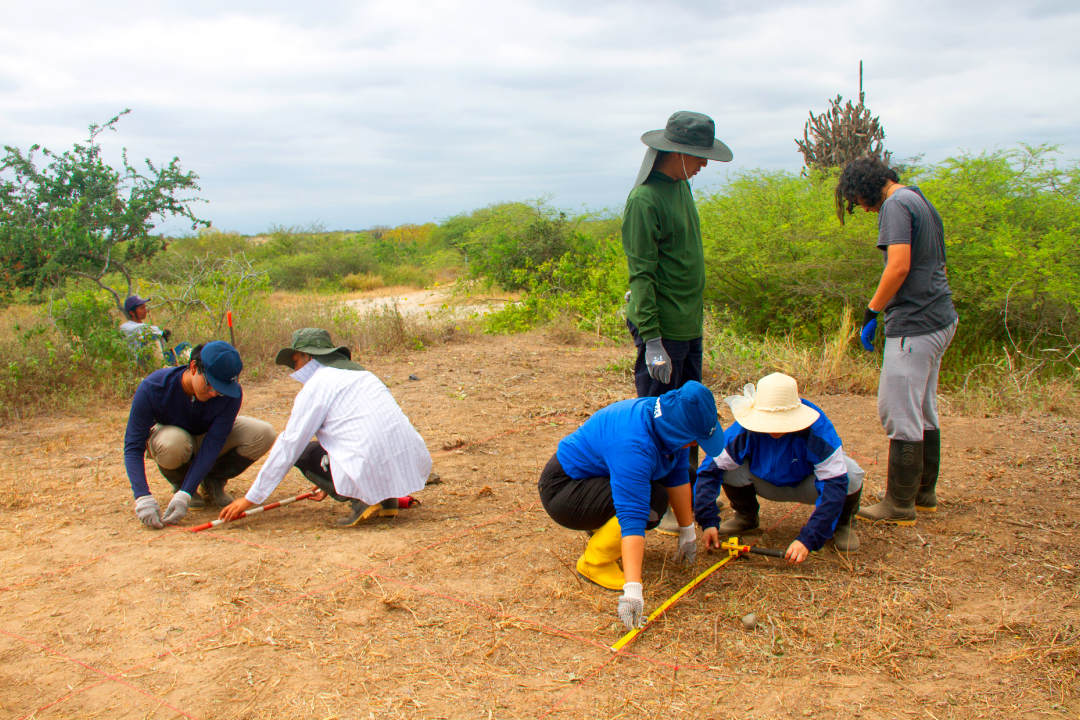
Archaeology has a long history at ESPOL and in Ecuador. It is the only Archaeology program on the Ecuadorian coast. Our graduates study, protect, explain, and share the cultural and archaeological heritage of the region and the country.
A direct benefit for students
This process helps make the program better for our students. Accreditation means:
- Students receive an education that follows international quality standards.
- Fieldwork, laboratories, and projects keep improving.
- The professional profile of graduates fits the needs of archaeology and heritage work.
- Students can share their opinions and help improve the program.
- Students have better chances to find jobs, do internships, and connect with graduates and employers.
Why CONAC?
CONAC is the right organization for this program. Its 2026 Reference Framework looks at the program as one complete system. It also puts the student experience at the center. The framework has three main ideas:
- Integrality: CONAC looks at teaching, research, management, community projects, resources, and results together.
- Articulation: CONAC checks how the processes of the program and the university work together to reach their goals.
- Transversality: Quality principles must be visible in all activities of the program.
CONAC also looks for seven principles in every area of the program: social responsibility, social and gender equity, inclusion, excellence, innovation at the cutting edge, social innovation, and interculturality.
What will be evaluated?
The evaluation has four modules:
- Institutional: ESPOL's context and policies, continuous improvement, student development, and community outreach.
- Core: the main part of the evaluation. It has five areas: continuous improvement, students' overall education, professional development of teachers, curriculum, and facilities and equipment.
- Research: research lines and projects, available resources, and the impact of research, including how it connects with teaching.
- Professional: training for professional work and links with the job market, including internships, employability, relationships with employers, mentoring, and work experience.
From October 21 to 23, the CONAC evaluators will visit the program. During the visit, they will:
- interview students, teachers, graduates, and employers;
- see a showcase of improvement and innovation projects;
- tour university facilities and the program's own spaces.
The FCSH invites the whole Archaeology community to take part in this process. It shows ESPOL's commitment to academic excellence. It also shows our commitment to training professionals who protect and value Ecuador's heritage.