
The Faculty of Social Sciences and Humanities (FCSH) of ESPOL is organizing the sixth edition of the virtual international conference Reducing Poverty in Latin America 2026. The event brings together researchers from the United States, the United Kingdom, Singapore, Argentina, Brazil, Colombia, and North Macedonia, who will present recent findings on how artificial intelligence (AI) is transforming social, educational, and labor conditions across the region. Attendance is free, with prior registration and limited seats.
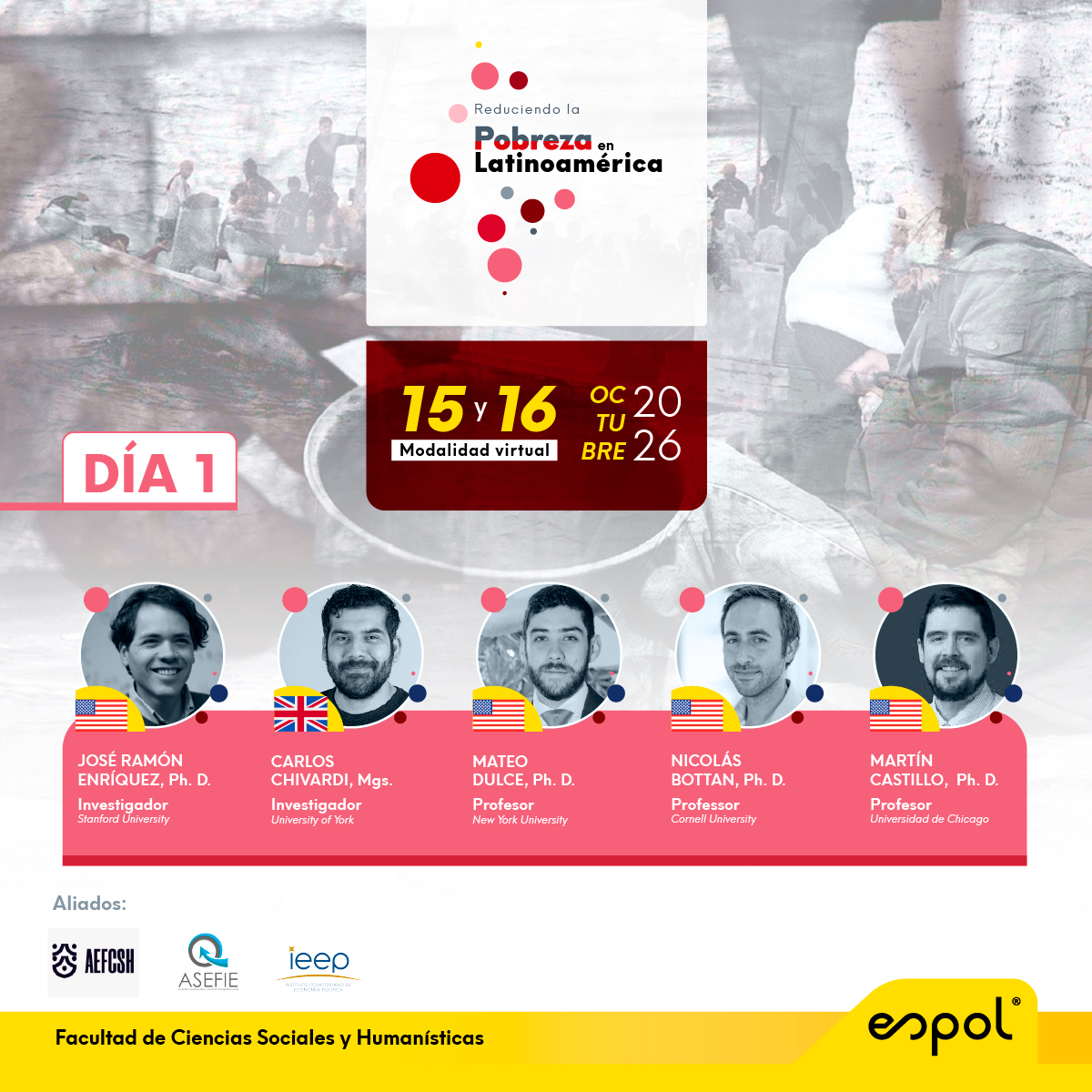
The first day, "Uncovering the Limits of AI, Social Determinants, and Educational Innovation in Latin America," will address the topic through the lenses of democracy, child health, resource allocation, and education. Participants include José Ramón Enríquez (Stanford University, U.S.), Carlos Chivardi (University of York, United Kingdom), Mateo Dulce (New York University, U.S.), Nicolás Bottan (Cornell University, U.S.), and Martín Castillo (University of Chicago, U.S.). Topics include the use of generative AI in pro-democracy platforms, the social determinants of child mortality analyzed through machine learning, and experimental evidence on the use of learning platforms in Chilean primary schools.
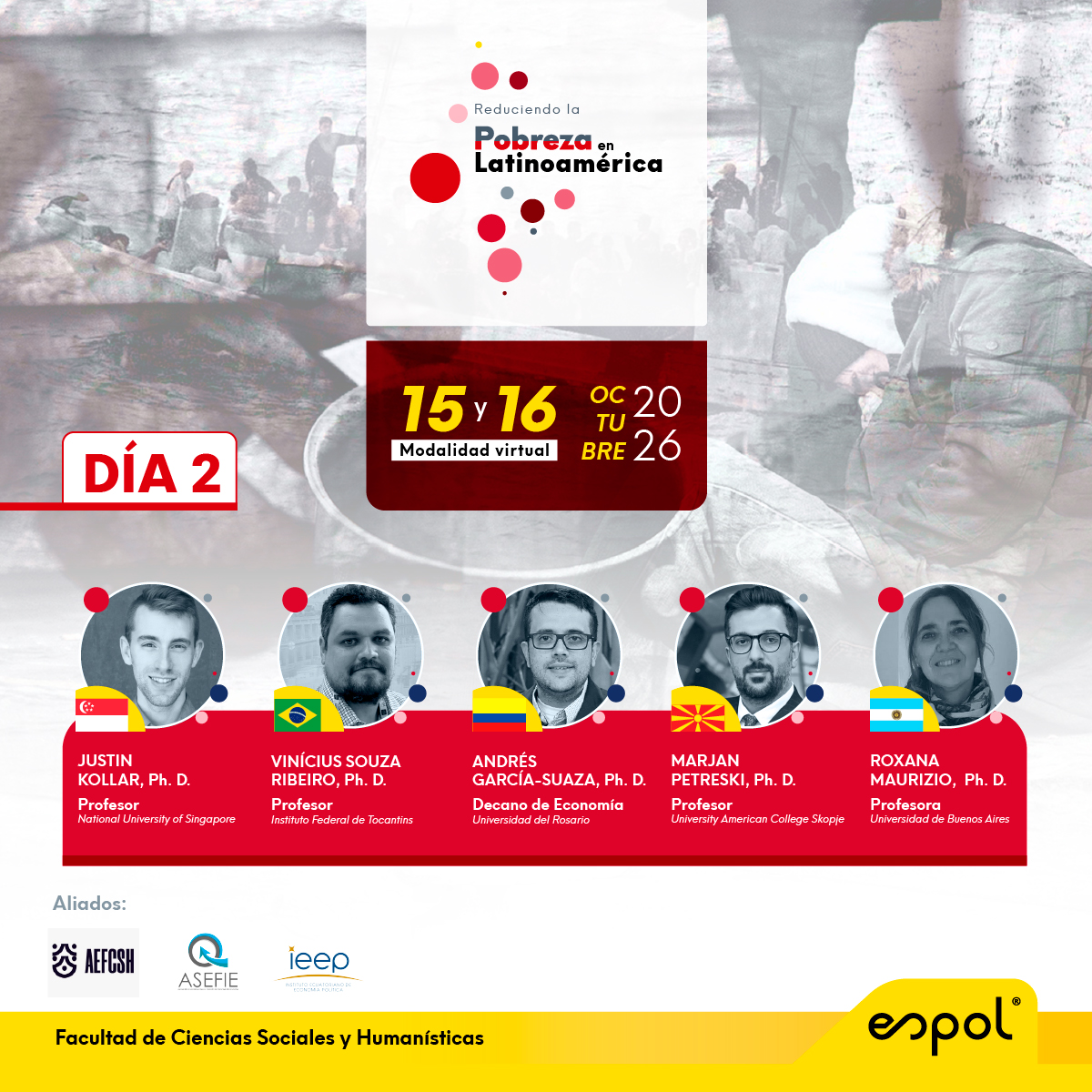
The second day, "Digital Capitalism and Frontier Markets: Structural Challenges in the Age of AI and Global Value Chains," will focus on employment, inequality, and the global economy. Speakers include Justin Kollar (National University of Singapore, Singapore), Roxana Maurizio (University of Buenos Aires, Argentina), Vinícius Souza Ribeiro (Federal Institute of Tocantins, Brazil), Andrés García-Suaza (Universidad del Rosario, Colombia), and Marjan Petreski (University American College Skopje, North Macedonia). They will examine everything from the demand for AI skills and the unequal impact of AI on Colombia's labor market to the resilience of Central, Eastern, and Southeastern Europe in global value chains.
The program also includes workshops on fiscal incidence, illicit markets, and game theory applied to organized crime. Registration and the full agenda are available at: https://www.fcsh.espol.edu.ec/en/reduciendo-la-pobreza-en-latinoamerica-2026