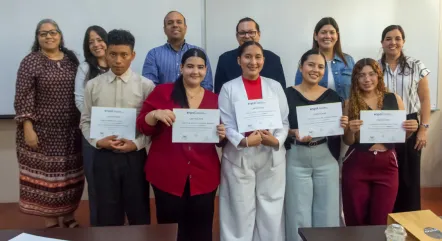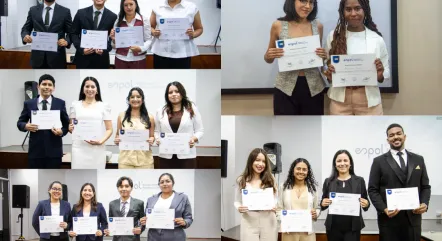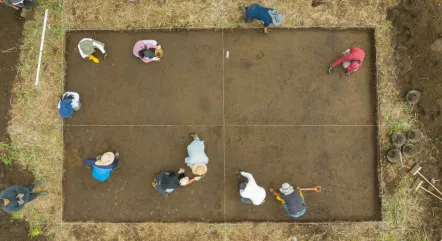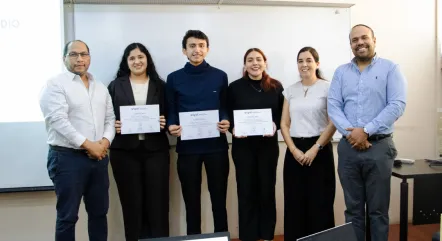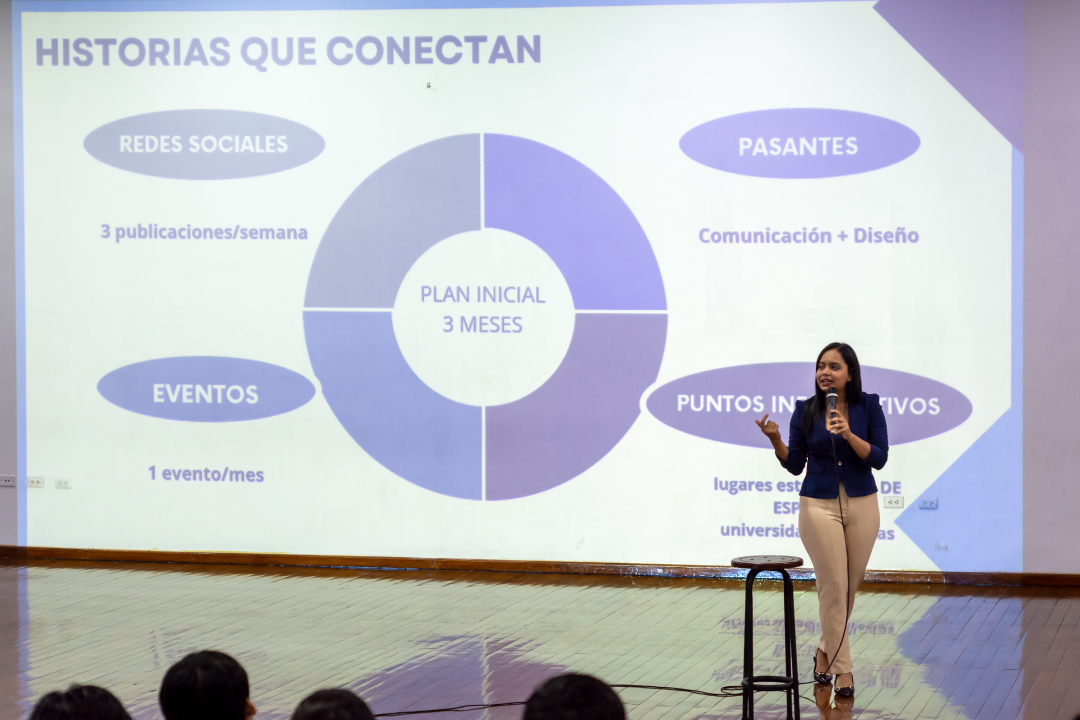


An AI assistant that helps prevent food waste at a community soup kitchen. A campaign that turns a walk in the forest into a form of donation. A signage app that teaches visitors science in a park without needing a guide. These are among the results presented by 14 student teams from ESPOL's Faculty of Social and Humanistic Sciences (FCSH) at the closing event of the Social Development and Volunteering course, led by professor Humberto Morán Rodríguez.
Throughout the semester, each team worked alongside a partner foundation or organization to diagnose a real problem — ranging from a lack of digital visibility to a shortage of adequate spaces — and to respond with a concrete, technically grounded proposal designed for actual implementation. The result was a catalog of solutions that blends social creativity with project management tools: Design Thinking, Theory of Change, logical framework matrices, stakeholder mapping, and the Business Model Canvas.
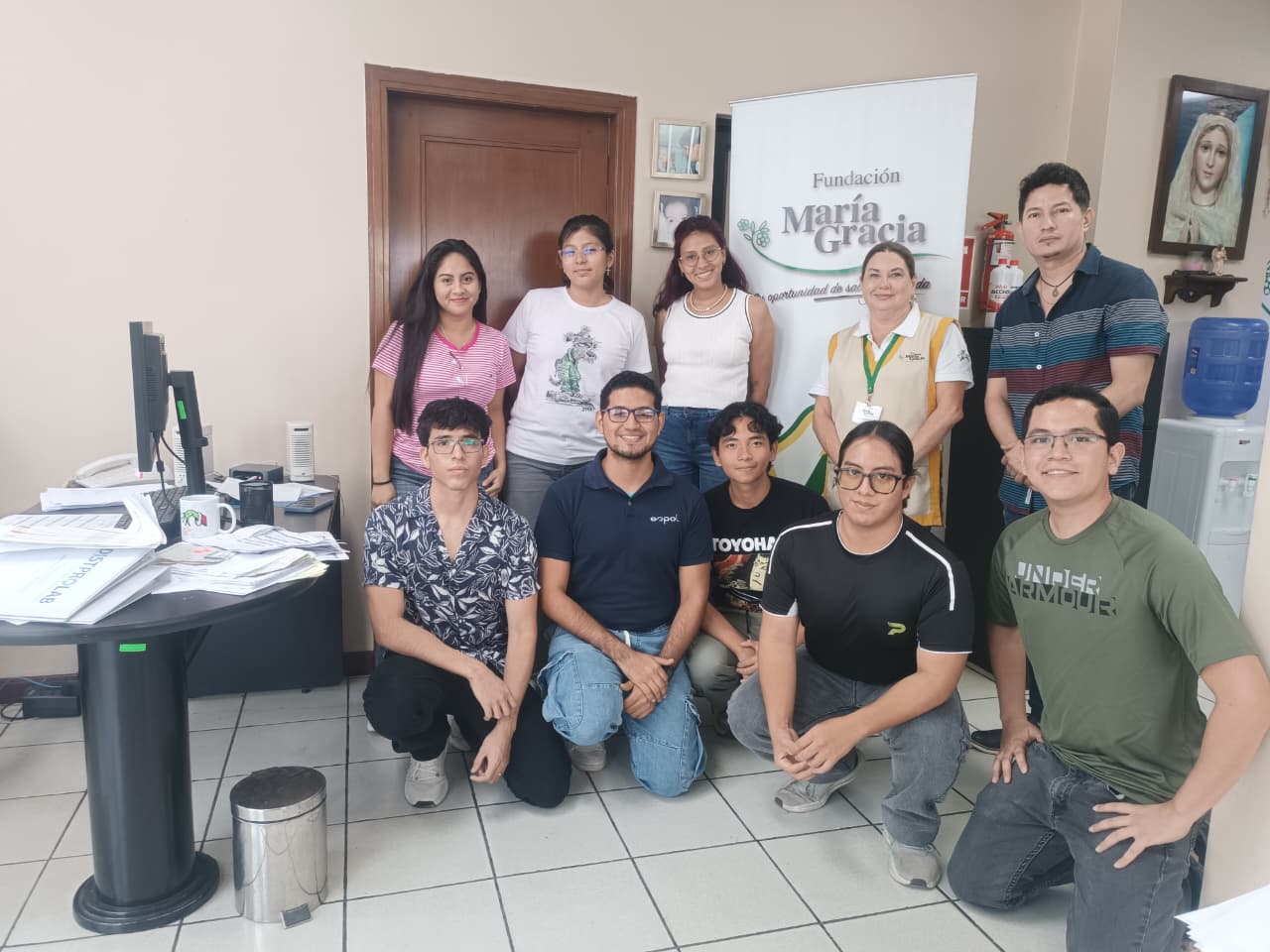
Fourteen different responses to fourteen problems
For Fundación Acción Solidaria, the team behind FoodFlow designed a platform that uses artificial intelligence to manage inventory at the "Pan para mi hermano" community kitchen and coordinate volunteers. For the Asociación Sordos del Guayas, Señas de Cambio turned the lack of a dedicated physical space into an opportunity: a digital assessment tool that evaluates corporate inclusion practices and connects businesses with the association. And for The Social Project's mangrove nursery in Puerto Hondo, EcoMangle tackled a logistical problem — the shortage of organic substrate — through a circular-economy approach that reuses leaf litter from the university campus.
Below is a summary of the solutions students presented to each partner organization:
| Foundation / Organization | Student Project | Designed Solution |
|---|---|---|
| Fundación Acción Solidaria (Pan para mi hermano) | FoodFlow | An AI-powered platform that manages inventory, flags expiration dates, and suggests menus to optimize the community kitchen. |
| Asociación Sordos del Guayas | Señas de Cambio | An interactive digital assessment on inclusion that connects businesses with the association to secure physical space and donations. |
| Fundación María Gracia | La Ruta del Cambio | Charity hiking events where entry fees are paid through donations of infant formula and essential goods. |
| Fundación Voces del Autismo | Entre risas y respiros | Self-care retreats for caregiving mothers, paired with recreational activities for their children with ASD. |
| Parque Ajá | QR Code Interactive Signage | QR-coded plaques at educational stations offering videos and information for self-guided learning. |
| Fundación Sin Barreras | Social Life | An incentive system with attendance tracking that rewards workshop participation with prizes and recreational activities. |
| Fundación Inkary | BRIVE – Specialized Volunteer Brigades | Volunteers organized into brigades with leaders and badges ("Guardians of the Dry Forest") to sustain reforestation efforts. |
| Fundación Jacinta y Francisco | Haz visible lo que importa | Reactivated social media presence and audiovisual content, plus on-campus information points, to raise the foundation's visibility. |
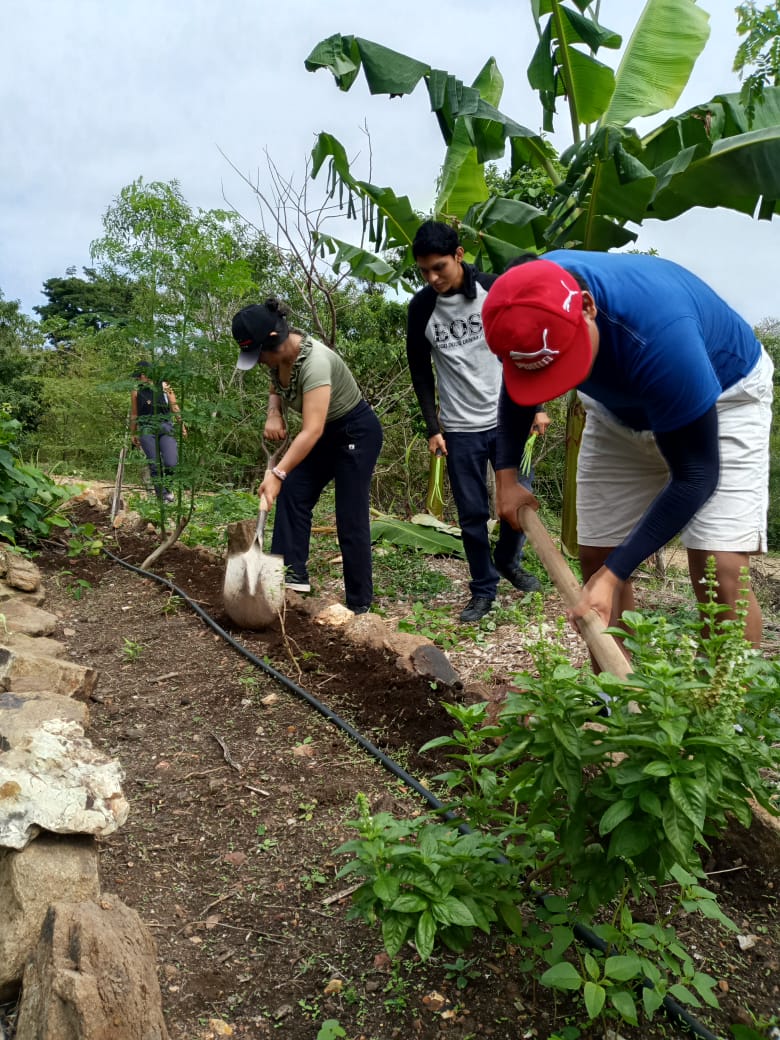
| Fundación The Social Project | EcoMangle | Composting of leaf litter from ESPOL's campus to produce organic substrate for the mangrove nursery. |
| Proyecto Social Distrito 100 | Identidad Urbana | Park revitalization through lighting, equipment, and collaborative murals to strengthen community identity. |
| Fundación Sendero Azul | Voces Visibles | Short social media videos that portray, with warmth and respect, the daily lives of children with ASD and their families. |
| Fundación Sor Dominga Bocca | Click con Propósito | Debates and personalized tutoring to foster critical thinking and responsible use of artificial intelligence. |
| Casa de los Niños de Santa Teresita | Súmate a la Acción | A sports-charity event paired with digital campaigns and corporate sponsorships to sustain the foundation's programs. |
| Fundación Clemencia | Clemencia Activa | A collaborative system connecting partner companies with the foundation's needs for a traceable flow of donations. |
For FCSH faculty, the value of this exercise extends well beyond a final grade. Designing a solution a foundation can genuinely use forces students to move past assumptions and confront reality: interviewing beneficiaries, understanding budget and time constraints, and defending their proposal before the very people who know the problem firsthand. In practice, it is an exercise in social responsibility that builds both technical skills — project management, design thinking, communication — and human competencies: empathy, active listening, and commitment to one's community.
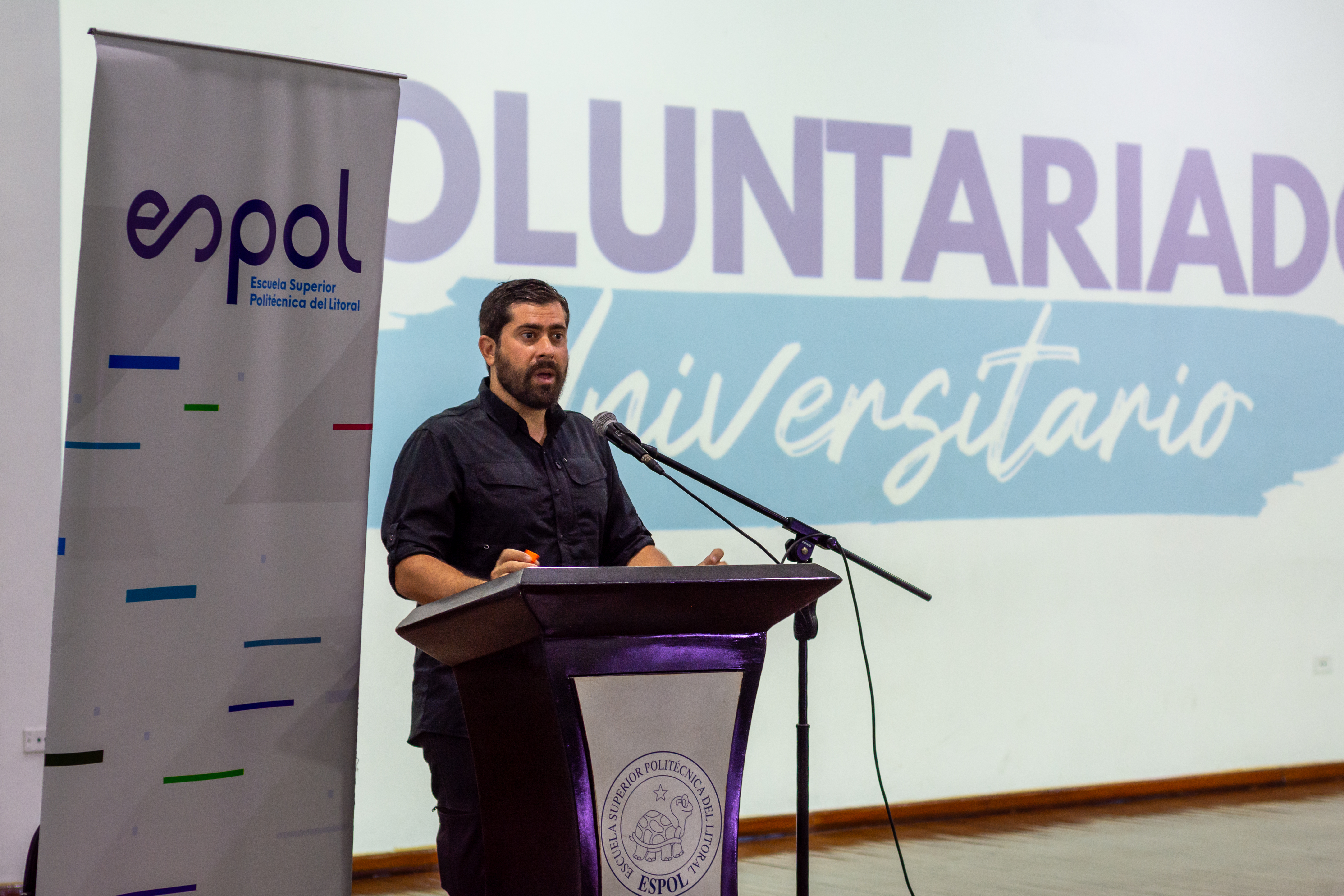
That human dimension came through clearly in the remarks of Ezequiel Castro, a representative of The Social Project, who shared his volunteering experience with attendees and emphasized how well-designed social innovation projects generate concrete, lasting benefits for communities — a sentiment echoed, according to organizers, by other foundation representatives present at the event, who praised the technical quality of the proposals and noted they will serve as real input for their institutional work.
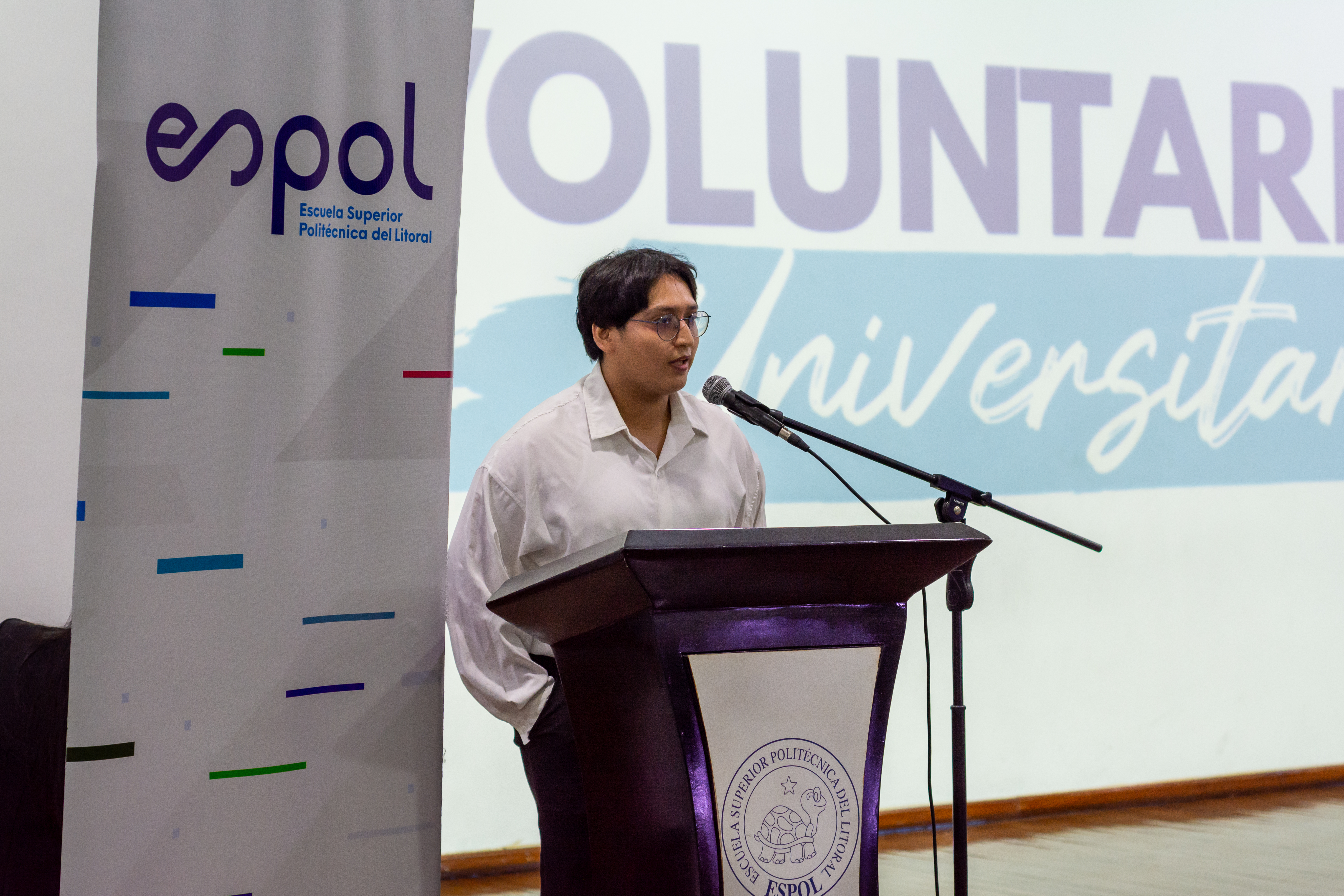
The event also featured Justin Hermenejildo, a student of Auditing and Management Control and volunteer with the community project La Unión Emprende in Durán, who encouraged fellow students to experience volunteering beyond the classroom. His testimony captured the spirit of the course: comprehensive education doesn't happen only when a project is presented, but when it's sustained over time — both within and beyond the academic semester.
Social Development and Volunteering is a cross-disciplinary course offered at ESPOL, in which students learn to understand social realities, diagnose problems, and manage transformative volunteering initiatives through social action activities with foundations, vulnerable sectors, and priority-attention groups — developing professional, social, and human competencies through real-world experience.